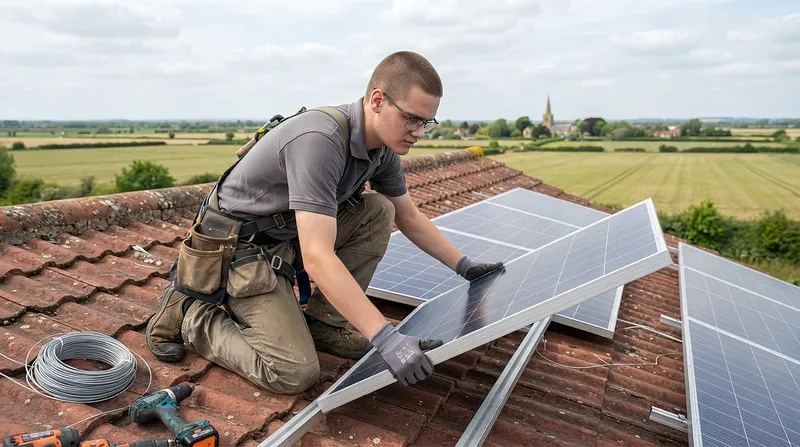
How much does a solar panel system cost in the UK?
Solar panel and battery storage costs in the UK have come down over the past decade, but the range is still wide depending on system size, battery brand, and roof complexity. Here is what to expect in 2025–2026.
Typical solar and battery costs (2025–2026)
| System type | Typical price range |
|---|---|
| 3.5 kW solar panels only (no battery) | £5,000 – £7,000 installed |
| 4 kW solar + 5 kWh battery | £8,000 – £12,000 installed |
| 6 kW solar + 10 kWh battery | £12,000 – £16,000 installed |
| Battery-only retrofit (5 kWh) | £3,500 – £5,500 installed |
| Standalone battery (10 kWh) | £6,000 – £9,000 installed |
| Solar PV diverter for hot water | £250 – £400 installed |
| Air source heat pump (before any grant) | £8,000 – £14,000 installed |
What affects the price?
- Battery brand. GivEnergy, Tesla Powerwall, and SolarEdge are common in the UK. Tesla is generally the most expensive but has strong brand recognition; GivEnergy offers good value with solid local support.
- Panel quality and warranty. Tier-1 panels (JA Solar, Trina, LG) typically carry a 25-year performance warranty and cost more upfront than budget alternatives.
- Roof type and shading. Simple trussed roofs with clear south-facing aspect are cheapest to fit. Complex roof lines, slate/tile re-hanging, and shading from trees or chimneys reduce output and may need additional panels.
- Export tariff. Under the Smart Export Guarantee (SEG), suppliers pay you for exported electricity — rates vary significantly between suppliers, so it's worth shopping around once your system is installed.
- MCS certification. Installers must be MCS-certified for you to access SEG payments and some insurance/warranty terms — confirm this before booking.
Return on investment
At recent UK electricity prices (Ofgem's price cap has moved between roughly 24–30p/kWh through 2024–2025), a well-sited 4 kW system can offset a meaningful share of a typical household's electricity bill, with a battery capturing more of the daytime generation for evening use. Payback periods for solar without a battery are typically 8–12 years; adding a battery extends payback but improves self-consumption, particularly if you're on a time-of-use tariff. As of the time of writing, new-build VAT-free periods and relief schemes are reviewed periodically — check current rates with your installer.
Things to check before buying
- MCS certification. Solar and battery installations should be carried out by an MCS-certified installer and notified to your District Network Operator (DNO) under the G98/G99 connection process — make sure your installer handles this.
- Warranties. Panels typically carry a 20–25 year performance warranty. Inverters and batteries typically carry 5–10 year warranties — check what's included and who honours it if the installer later closes.
- Get multiple quotes. Solar pricing varies enormously between installers. TruePro sends your request to every matching verified solar installer in your area, and each quote shows their trust score, so you can compare on more than price.
- Boiler Upgrade Scheme. If you're considering a heat pump alongside solar, England and Wales homeowners may be eligible for a government grant toward the cost — funding levels and eligibility rules are reviewed periodically, so confirm current terms with your installer or on GOV.UK.
- Payment protection. Avoid paying a large deposit or the full amount upfront. TruePro's payment protection holds your payment securely until you've confirmed the system is installed and working correctly.